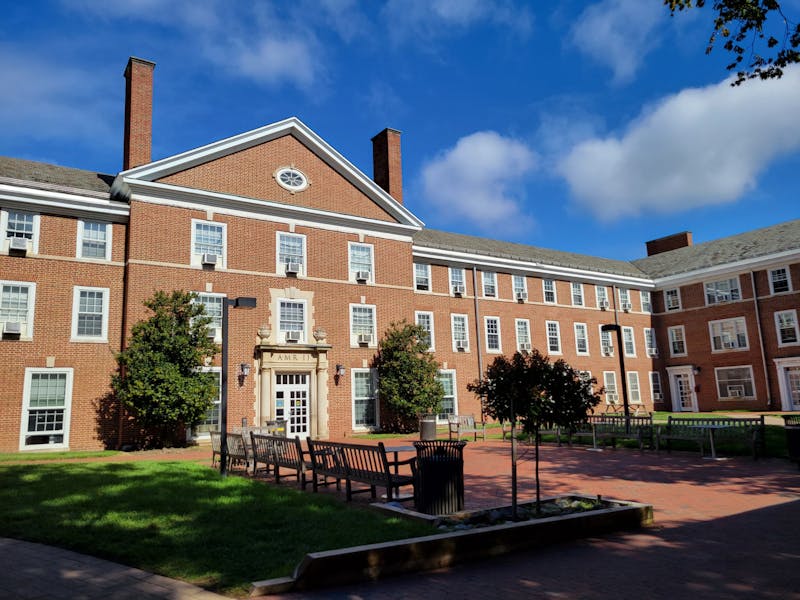
On October 9, The News-Letter received an anonymous tip regarding a supposed break-in at the AMR II dorms. Reports indicated that staff from Hopkins discovered a homeless woman in the AMR II basement and escorted her out. This incident sparked discussions among students on the anonymous platform Sidechat, with many expressing their alarm over the lack of communication from university officials. One user questioned, “Why is no one talking about how there was a homeless lady in the basement of AMR II last week?” and noted the absence of any email notification about the situation.
However, upon further investigation, The News-Letter confirmed that the claims were unfounded. No police reports or notifications from residential life had been issued concerning the alleged break-in. University representatives assured The News-Letter that, “The matter has been fully investigated and there was no break-in.”
The discussions surrounding residential safety have intensified among students, reflecting their concerns about the balance between accessibility and security. While the university confirmed that the break-in claims were false, the incident prompted broader questions about how safe students feel in residence halls. Additionally, an anonymous source reported a second incident involving a suspicious individual in AMR II on October 11.
Freshman Lyla Urban shared her feelings of unease regarding dorm accessibility in an interview with The News-Letter. She mentioned a previous incident where a non-student entered AMR II without a key card, which raised concerns for her. Urban proposed that the university enhance monitoring of building access. “I think that the people stationed outside should be checking to see, like “Hey, does this look like a freshman?”” she suggested.
Freshman David Maier echoed Urban”s concerns in an email to The News-Letter. He acknowledged the university”s efforts to implement safety measures but expressed worries about their effectiveness. “Hearing about the recent incidents on campus certainly has made me concerned about overall safety,” he stated, emphasizing the need for more attentive security staff.
To assess student perceptions of safety, The News-Letter conducted a survey targeting freshmen and sophomores. Approximately 47.8% of respondents lived in freshman dorms, while 39% resided in sophomore housing. The survey revealed an average safety rating of 8.35 out of 10 among students, indicating a generally positive sense of security despite individual concerns.
Responses varied, with some students like freshman Charlie Langendorf reporting a positive personal experience. “I think that it would be nice to have two swipes to get in all the time,” he remarked, noting that he had not personally witnessed any safety issues.
The survey also gauged students” awareness of resources for reporting safety concerns, which received an average rating of 6.57. While many students recognized the university”s safety protocols, some expressed doubts about their consistent implementation.
Anonymous survey responses highlighted concerns about the behavior of certain security personnel. One student noted, “It might be a tad bit unsafe that I”ve witnessed Alliance Officers high on the job.” Others criticized the effectiveness of security guards who could not intervene in threatening situations.
Concerns about dorm safety extend beyond physical building security to include issues like lighting and security patrol visibility. Freshman Taisiya Kukva suggested improvements, stating, “More lighting and patrol presence on common walking routes, especially at night, would help a lot.” This sentiment reflects a growing demand among students for enhanced safety measures.
In response to student feedback, the university reiterated its commitment to improving residential safety. “We take all student-reported concerns seriously,” university officials stated. They announced the installation of an additional card reader in AMR II to bolster access control.
While many students have acknowledged the university”s ongoing safety initiatives, some believe there is still room for improvement. Faith Odungide, a resident of AMR I, advocated for clearer communication regarding safety incidents. She emphasized the importance of detailed descriptions of suspects in safety reports, arguing that vague descriptions hinder student awareness.
Overall, despite the recent unfounded break-in claims, student discussions reveal a complex landscape of safety perceptions within campus housing, underscoring the need for ongoing dialogue and improvements in security measures.