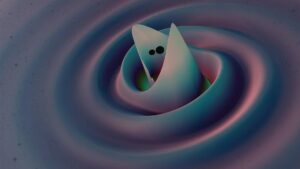
On September 14, 2015, at 4:51 AM Central Time, a historic event unfolded as scientists made an unprecedented observation: the collision of two black holes. These black holes, with masses 29 and 36 times that of our sun, had been orbiting each other for millions of years. Their spiraling movements accelerated over time, ultimately leading to their merger into a single, larger black hole.
Since that groundbreaking detection, the scientific community has experienced a series of significant advances that enhance our comprehension of the universe. Researchers from the College of Arts and Science have played a pivotal role in these developments, contributing to the evolving field of black hole physics and gravitational wave research.
The detection of gravitational waves, ripples in spacetime caused by such cosmic events, has opened new avenues for astrophysical exploration. This milestone not only validated predictions made by Einstein”s general theory of relativity but also set the stage for a new era in observational astronomy.
As we commemorate the tenth anniversary of this landmark discovery, the implications of gravitational wave astronomy continue to resonate throughout the scientific community. Ongoing research is expected to further unravel the mysteries surrounding black holes, including their formation, evolution, and impact on the cosmos.
Overall, the journey from the first detection of gravitational waves to the ongoing research and discoveries of today highlights the dynamic nature of astrophysics and the profound questions that remain about the universe we inhabit.